.png)
Whispering Pines Nature School


Age Requirements:
In order to keep the activities age appropriate and students engaged, we ask that children fit into the age categories listed below:
Must turn 5 by September 1, 2026.
Must not turn 9 before September 1, 2026
Our Nature School is designed for children ages 5–9 (K-3rd grade) who are looking for a “school-like” rhythm within a dynamic, outdoor-centered environment. While we honor academic structure and skill-building, our days look very different from a traditional classroom. Instead of desks and worksheets, you’ll find exploration, hands-on discovery, collaboration, and meaningful connection woven throughout each day. We venture out onto our 18 acres to take in what the natural world has to offer us.
We intentionally integrate math, literacy, science, social studies, art, and cooking into authentic learning experiences. Literacy may come alive through storytelling and journaling in nature. Math might be practiced through measuring materials for a build or budgeting supplies for a group project. Science is explored through observation, experimentation, and real-world inquiry. Learning is active, integrated, and rooted in curiosity.
Project-Based Learning is a cornerstone of our program. Children may design and build a story-inspired outdoor community, create and maintain a functioning weather station, construct a winter animal habitat diorama, or collaborate on a long-term research and presentation project. These experiences bring academic subjects together in a cohesive and engaging way while fostering teamwork, leadership, and creative thinking.
Above all, our Nature School cultivates capable, confident learners who see connections between subjects and understand that learning is not confined to a workbook — it is something we live, build, and experience together.
Outdoor Classroom Time and Exploration
The outdoor classrooms are created for exploring, building with loose parts material, art, sensory experiences, adventure, problem solving, and more. We have a sand pit, mud kitchen, climbing logs, gathering circle, hiking trails, canvas yurt, and other fun areas throughout the property.

Cooking and Baking
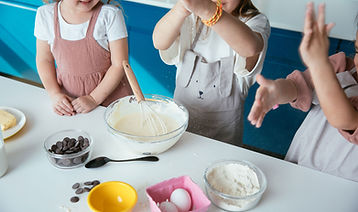
Cooking and baking are a favorite part of our time together—because who doesn’t love making and sharing food? We strive to accommodate dietary needs and preferences so every child can participate comfortably while enjoying a fun culinary experience. Whether we’re preparing recipes in our classroom kitchen or cooking outdoors over the fire, students build practical skills, confidence, and joy in creating something together.
Nature Art Experiences
Art is available each day in our forest classrooms and schoolhouse. Students can experiences various mediums and tactile experiences with natural materials. During the colder months, we pivot to a more open ended art experience that we have in the indoors. However, we dive into more complex art in our Tuesday class. Needle felting, clay, mosaic, painting, and more.

Project-Based Learning
Project-based learning is a cornerstone of our program, an approach inspired by the work of Lillian Katz. Children investigate meaningful topics through hands-on exploration, collaborative problem-solving, and sustained inquiry. Rather than simply receiving information, students ask questions, gather ideas, create, test, and reflect, allowing learning to grow naturally from their curiosity. This process builds critical thinking, creativity, and a deep sense of ownership in their learning.
STEM Learning
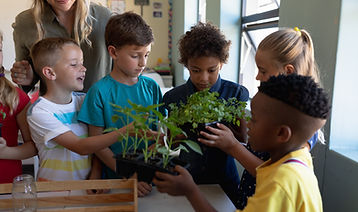
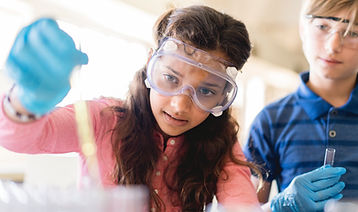
We experience STEM through group work with messy science experiments, nature studies that dive into scientific facts, engineering with materials, and thinking and brainstorming logically with peers.
Wild Math
While math is not specifically the focus of our learning, we do like to incorporate such activities in the outdoors and with natural materials within the environment. This often done by using the curriculum Wild Math. Students work together or individually through hands-on experiences to expand their knowledge of math concepts.

Literacy through Books
Teaching literacy is such a wonderful component to a child's education. Through literature, children can learn vocabulary, cultural diversity, emotional intelligence, critical thinking and problem solving skills, and more! Literature lends itself nicely to art and drama expression. Students can often times find a character in the story that they can relate to or find characteristics that are inspiring to them! We center many of our activities based off of books we are reading.

Social Studies
Our social studies experiences help children understand the world by exploring it. Students practice orienteering and simple mapmaking, learn how communities work and care for one another, and discover geography through hands-on study of landforms and bodies of water. Cultural studies introduce them to traditions and ways of life from different places, building curiosity, respect, and a sense of belonging.
